name9.png)

How it Works
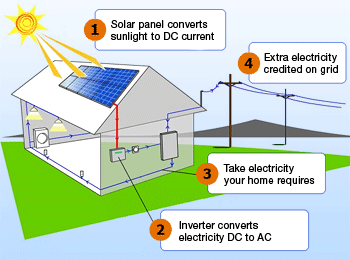
A solar panel “works by allowing photons, or particles of light, to knock electrons free from atoms, generating a flow of electricity,” according to Live Science. That’s a technical way of saying that the panel’s photovoltaic cells convert the energy in sunlight to electricity (specifically, direct current (DC))(Figure 1). This DC electricity is then converted to alternating current (AC) by an inverter(Figure 2) or micro-inverters.
AC is the type of electrical current you typically use when you plug anything into a residential wall socket. If you have solar on your roof, the system’s electrical panel sends power to your lights and appliances(Figure 3). All the extra electricity will be sent back to the grid and credited to your account(Figure 4), so you can use it when it's needed.

DO SOLAR PANELS WORK ON CLOUDY, RAINY, OR COLD DAYS?
We’ll cut straight to the chase – solar panels work just fine when it’s cloudy, rainy, and/or cold.
Are clouds and rain ideal for solar panels? Of course not. They are most effective in direct sunlight. But solar panels can still generate power when the sun is blocked by clouds – more than enough, in fact, to remain a viable source of electricity. Take Germany, for example. It’s not particularly warm or sunny but is nevertheless a world leader in solar energy.
As for winter, there’s some even better news: Solar panels are powered by light, not heat, and because of the way the technology works, they’re just as effective — if not more effective — in cooler temperatures as in hot ones.